
How to scale an e-commerce business: growth doesn't depend on a single tool
In my businesses, it happened when these four systems started working together.
After investing more than $1M in ads, I saw it over time.
It wasn't immediate.
And it wasn't the same in every case.
-

SHOPIFY →
The foundation
-

META →
Discovery
-

GOOGLE →
Demand
-

KLAVIYO ↻
Automation
Why this structure works
Most e-commerce businesses fail because they try to do everything at once or use the wrong tools. After investing $1M+ of my own money and generating $8M in sales, I found that you only need 4 components working in sync.
-

Tested with real money
Not textbook theory. Every component was tested with my $1M+ invested in 2 real businesses.
-

A system, not a tactic
It doesn't depend on a temporary "hack". These are tools that will still work 5 years from now.
-

Scalable and repeatable
I used it to build Ambient Lounge ($5M) and Eurofunda ($3M). Same system, different products.
Roles within the system.
Each component has a specific role. All of them are necessary. This is how they work together:
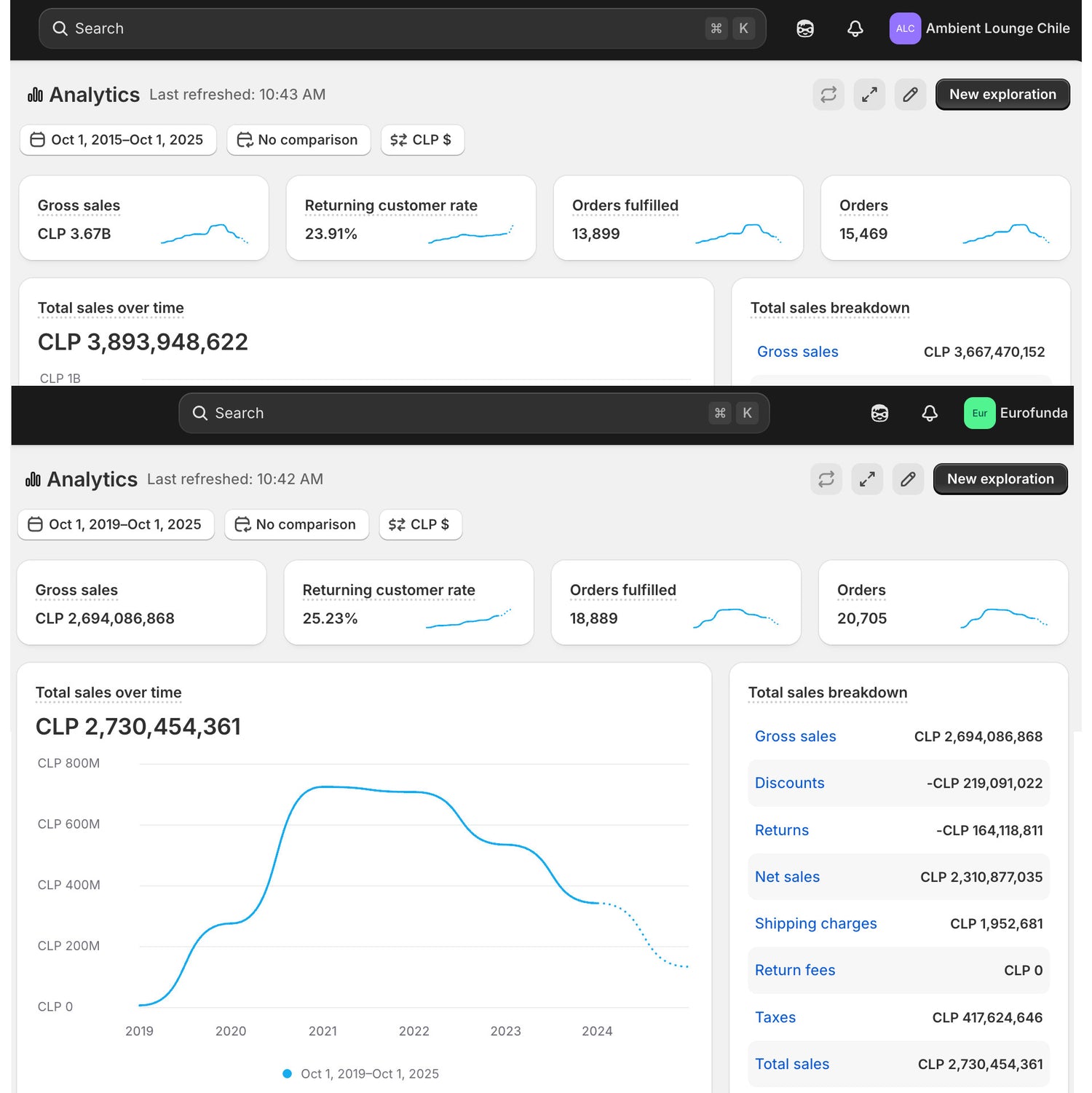
SHOPIFY – The operational foundation
What it is: Your professional online store. Not Wix. Not WordPress with WooCommerce. Shopify.
Why it works:
- Built specifically for e-commerce (not blogs turned into stores)
- Native integrations with every marketing tool
- Optimized checkout (fewer abandoned carts)
- Mobile-first (80%+ of traffic comes from mobile)
Key points:
- The theme you choose matters less than your collection structure
- The product page is where the purchase decision happens – more critical than the homepage
- The right apps (upsells, bundles) can raise your average order value by 30%+
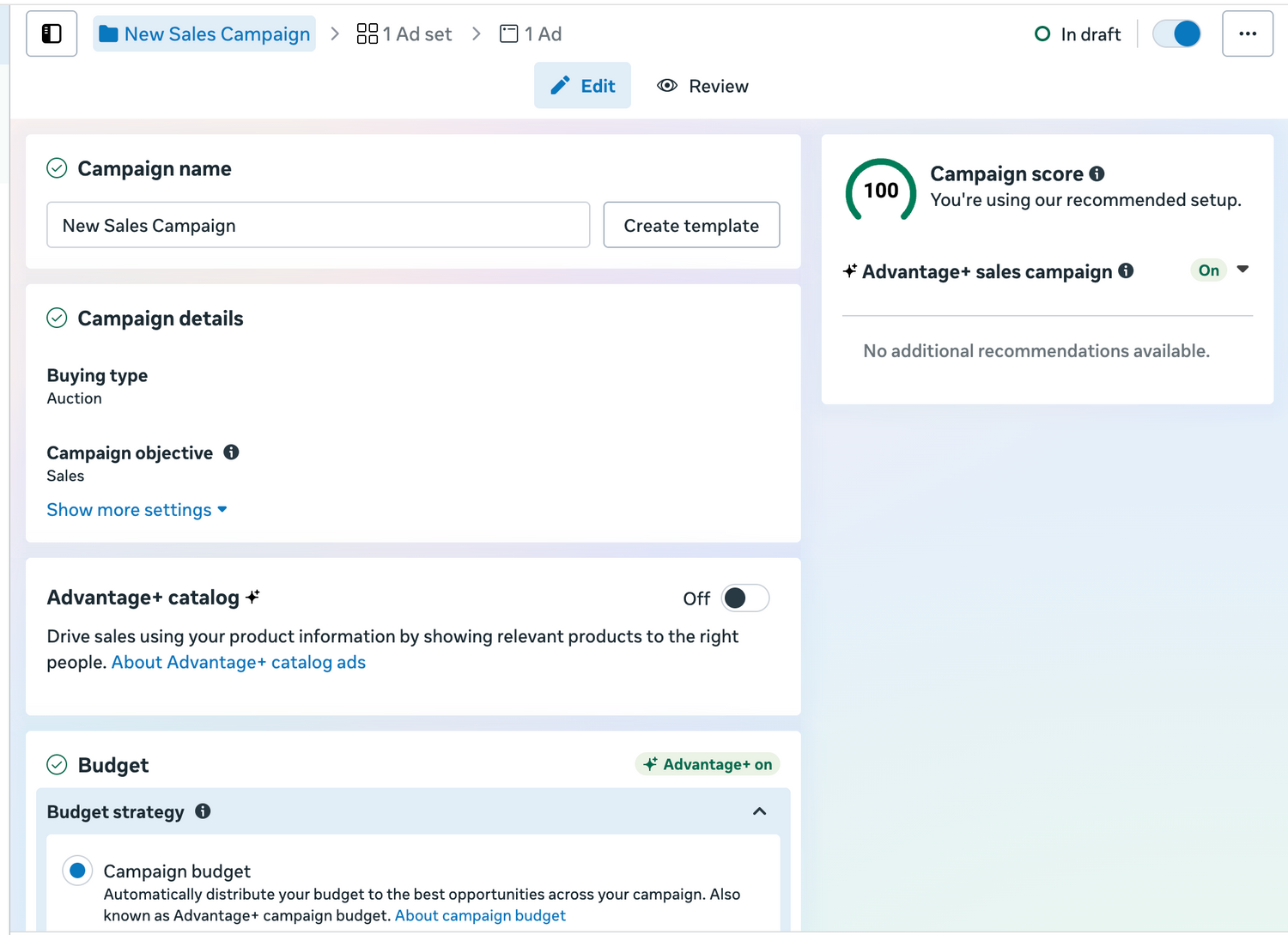
FACEBOOK ADVANTAGE+ – Creates discovery
What it is: Automated Meta campaigns that show your products to people who DON'T know they need you… yet.
Why it works:
- Massive reach (a whole region from one account)
- Product discovery (not everyone searches on Google)
- Visual storytelling (images and video)
Key points:
- Advantage+ Shopping is different from manual campaigns (and 80% of "experts" don't get it)
- 90% of success is in the creative, not the targeting
- The pixel needs 50+ conversions to optimize well
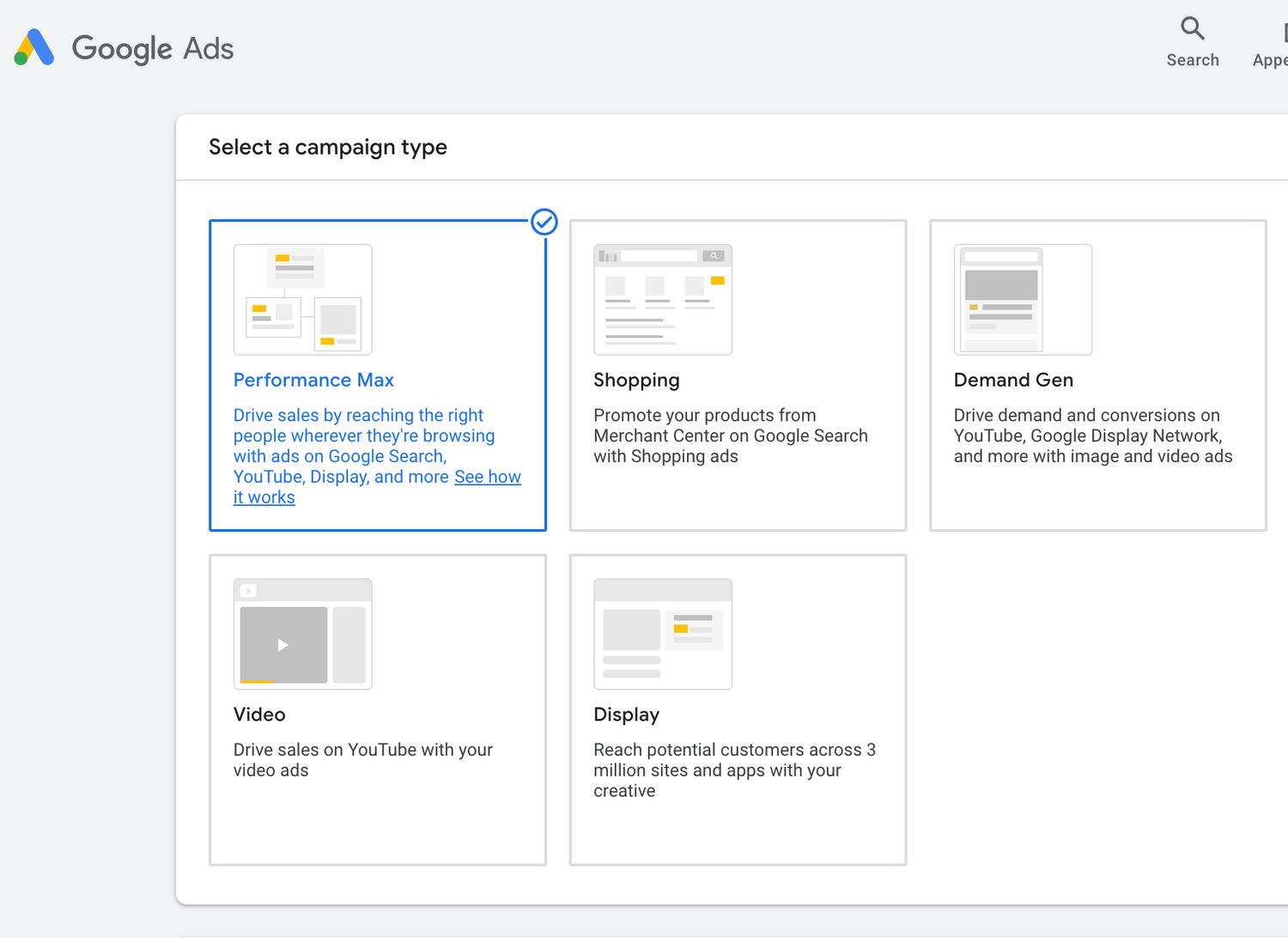
GOOGLE PERFORMANCE MAX – Captures demand
What it is: Automated Google campaigns that show your products to people who are ALREADY looking to buy.
Why it works:
- High purchase intent (someone searching "large bean bag sofa" wants to buy now)
- Google automatically decides where to show the ad (Search, Shopping, Display, YouTube)
- Lower cost per acquisition than Facebook for specific products
Key points:
- Poorly configured asset groups = 70% of the budget wasted
- The product feed matters more than the budget
- You have to "train" the algorithm for the first 30 days
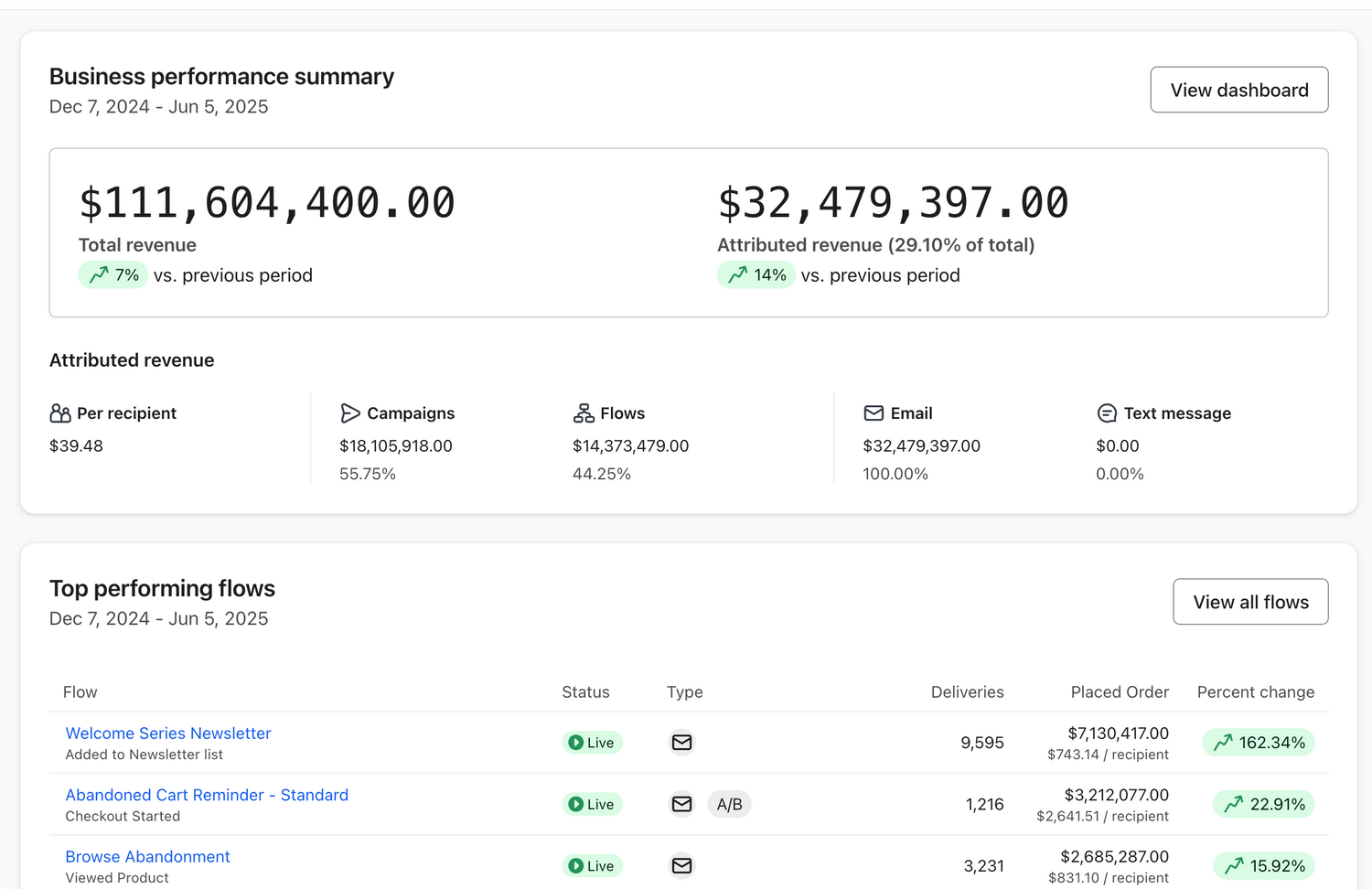
KLAVIYO – Automates and retains
What it is: Email marketing automation that turns visitors into repeat buyers without you lifting a finger.
Why it works:
- Recovers abandoned carts (10–15% recovery)
- Turns one-time buyers into repeat customers
- Automatic welcome series for every subscriber
- Advanced behavior-based segmentation
My experience:
"Klaviyo generated 30% ADDITIONAL revenue without increasing the ad budget. Once set up, it works 24/7."
Key points:
- 70% of carts are abandoned (recovering them = immediate $$)
- A returning buyer has 2–3x more lifetime value
- A well-built welcome series converts 5–8% of subscribers
My winning flows:
- Welcome Series
- Abandoned Cart
- Browse Abandonment
- Post-Purchase
How they work together (the complete system)
A simple, cyclical system that feeds itself
Performance MAX
Captura demanda
Advantage+
Genera descubrimiento
SHOPIFY
Tu tienda
Convierte en ventas
KLAVIYO
Email automation
Recompra automática
El Ciclo:
1. Google y Facebook traen tráfico (nuevos clientes)
2. Shopify convierte en ventas (tu tienda optimizada)
3. Klaviyo recupera carritos y hace recompras (automático)
4. Los datos mejoran las campañas → El ciclo se repite
Frequently asked questions
Does this model work for any e-commerce business?
It works especially well for e-commerce with its own products or brands that already have traction.
Do I need to use all these platforms?
Not necessarily. What matters is understanding the role each system plays in growth.
When does it make sense to review the business structure?
When the business is already growing and decisions involve real investment.
Shopify or WooCommerce for an e-commerce business?
For an e-commerce business that wants to scale, Shopify: it's built to sell, has native integrations with Meta, Google and Klaviyo, and a mobile-optimized checkout. It's the foundation I used to build Ambient Lounge and Eurofunda.
How much should an e-commerce business invest in advertising?
It depends on the margin. First you need your break-even ROAS: the minimum at which advertising pays for itself, accounting for taxes, product cost, shipping and fees. You can calculate it with the ROAS calculator (in Spanish).